Nitrile Gloves in 2026: Market Trends and a Practical Type-by-Type Selection Guide
Nitrile gloves have become the default choice for many medical, food, and industrial buyers because they offer a strong balance of barrier protection, comfort, and allergy safety. The global nitrile gloves market was valued at approximately USD 6.5 billion in 2025 and is projected to reach USD 13.2 billion by 2033, according to Grand View Research. This guide explains what is driving that growth, how to compare disposable nitrile gloves by grade and design, and which 2026 product trends matter for procurement decisions.
What Is Driving the Nitrile Gloves Market in 2026
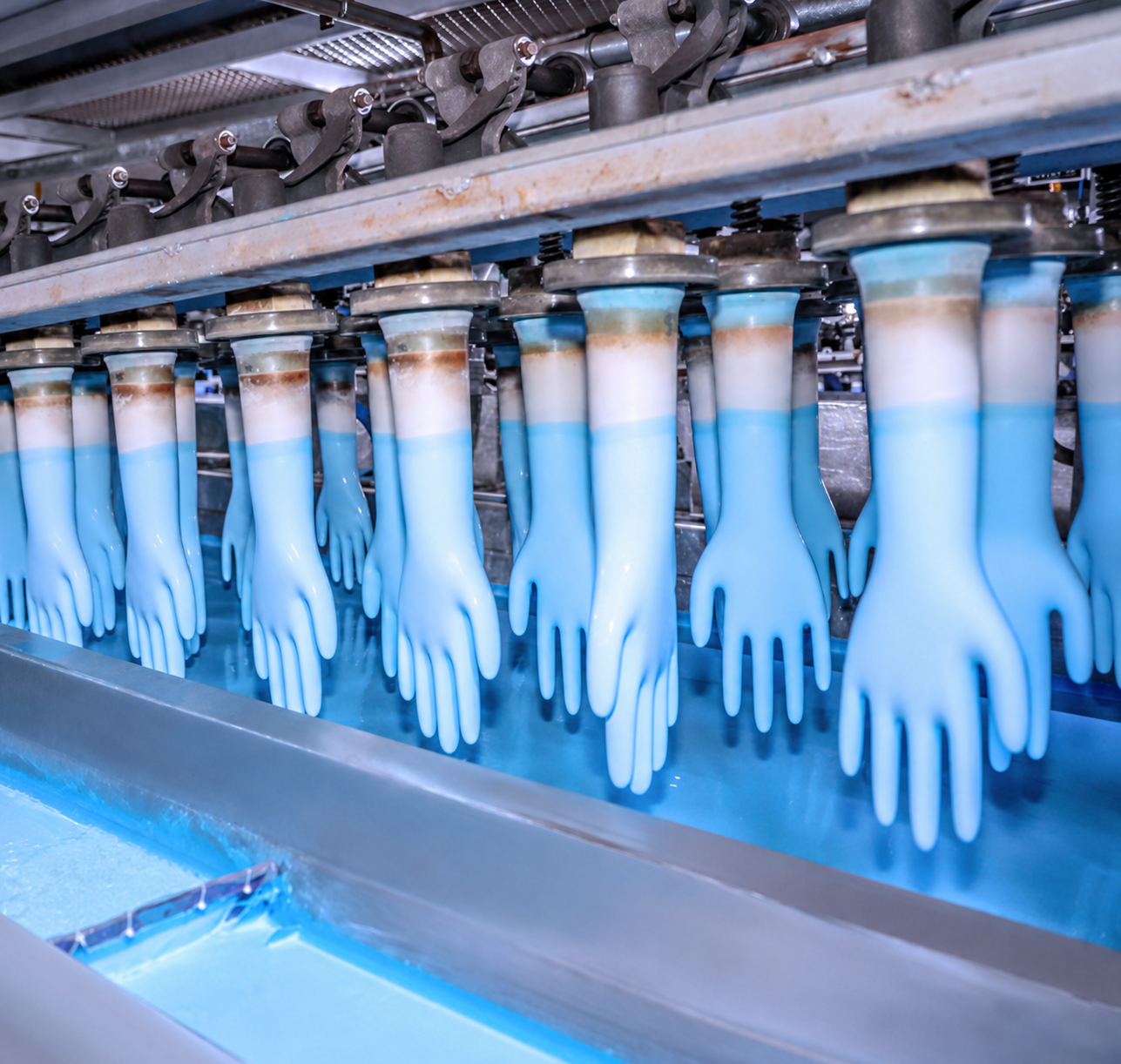
Powder-free nitrile gloves dominate demand. In 2025, powder-free nitrile gloves accounted for 74.8% of global revenue in the nitrile gloves market, according to Grand View Research. The reason is straightforward: powder-free versions remove the risk of powder-related irritation, which matters in medical exam rooms, food preparation, and clean industrial handling.
Medical and healthcare remains the largest end-use segment, holding an 80.1% revenue share in 2025 in the global nitrile gloves market. That share is supported by regulatory requirements: medical nitrile examination gloves must meet ASTM D6319 in the US or EN 455 in the EU, and they are typically manufactured with an AQL of 1.5. Buyers responsible for hospital supply chains therefore need more than a low price; they need documented compliance and consistent batch quality.

How to Compare Disposable Nitrile Gloves: Key Performance Criteria
Buyers evaluating nitrile gloves should focus on five measurable criteria before discussing price or MOQ: material thickness (mil), texture, powder status, applicable standard, and packaging format. Each criterion changes the glove's cost, protection level, and fit for a specific buyer segment.
A 3-mil medical exam glove is designed for short-duration, high-touch clinical tasks such as patient exams or dental procedures. A 4-mil industrial glove provides extra durability for handling tools, kitchen tasks, or tattoo work. A 5-mil food-grade glove adds thickness for food prep and kitchen environments where glove changes are frequent but punctures are more likely. The thickest options, such as 8-mil or 10-mil heavy-duty industrial gloves with diamond grip, are used for machinery, cleaning, and tasks involving water or chemical exposure.
Texture and Grip
Diamond textured nitrile gloves improve wet grip. High-performance diamond textures have been shown in industry analysis to increase wet-grip by up to 27%. For industrial buyers, a diamond grip reduces the risk of dropped tools or slipped containers when hands are wet or oily. For food service, textured fingertips help with tasks like handling slippery raw ingredients or opening packaging.
Powder-Free and Latex-Free Properties
Powder-free nitrile gloves are now the mainstream format. They eliminate airborne powder that can contaminate food or medical environments. Nitrile gloves are also inherently latex-free, making them appropriate for users with latex sensitivities. Buyers who manage multi-user facilities often standardize on powder-free latex-free nitrile gloves to simplify training and inventory.
Compliance and Certification
Medical gloves need AQL 1.5 and compliance with the relevant US or EU medical standard. Industrial gloves are evaluated for mechanical or chemical protection. Food-grade gloves must meet food contact regulations, which differ by country. A supplier's certificate suite should match the destination market, not just the product category.
Nitrile Gloves Type-by-Type: 2026 Product Landscape
Nitrile gloves are not a single product. Understanding the main categories helps buyers select the right glove for each use case and avoid paying for unnecessary thickness or certification.
1. Medical Exam Nitrile Gloves
Medical exam nitrile gloves are typically 3 mil powder-free textured gloves with AQL 1.5. They are used in hospitals, clinics, dental practices, and laboratories. Buyers should check whether the product meets FDA 510(k) requirements for the US market or EN 455 for the EU market. For medical distributors, products such as ANBOSON's Medical Exam Nitrile Gloves (model ABC-DG01) are supplied in standard bulk packaging with documented quality control.
2. Industrial Grade Nitrile Gloves
Industrial nitrile gloves are usually thicker than medical exam gloves, with models in the 4-mil range and options up to 8-mil or 10-mil. They are used for machinery operation, automotive work, cleaning, and tattooing. A key feature in 2026 is touch-screen compatibility, which allows workers to keep gloves on while using tablets or smartphones. Industrial gloves are tested for mechanical or chemical protection standards such as EN 388 and EN 374 where applicable.
3. Food Grade Nitrile Gloves
Food grade nitrile gloves are designed for food preparation, food service, and kitchen processing. They must comply with food contact regulations in the target market, such as FDA 21 CFR 177.2600 in the US, EU food contact regulations, or Japan MHLW Notification No. 370 for food contact safety. Food-grade models also typically feature powder-free construction and textured fingertips. A 5-mil food grade glove offers extra puncture resistance for handling utensils and raw ingredients.
4. Individually Wrapped Nitrile Gloves
Individually packed nitrile gloves are a growing niche in hospitality, beauty, travel, dental, and e-commerce retail. A pair is wrapped in a single pack, which reduces waste in settings where clients change gloves repeatedly. Individually wrapped gloves from ANBOSON (model ABC-DG01) can be branded with custom logos, and are available in 1 pair per pack format. These gloves have a different pricing structure (per bag) compared with bulk gloves (per piece), so buyers should model total usage cost rather than comparing unit prices directly.
Buyer Use Cases: What Different Segments Need
Medical Distributors
Medical distributors typically place large, recurring orders for exam gloves and box exam gloves serving hospitals and clinics. In one documented ANBOSON case, a medical distribution client ordered over 800,000 boxes (20 containers) and maintained stable recurring orders for more than two years. For this segment, the decision factors are FDA clearance, AQL 1.5 consistency, and delivery reliability.
E-commerce and Retail Brands
E-commerce brands selling on marketplaces such as Amazon FBA often need individually packed or consumer-ready nitrile glove packaging. One ANBOSON e-commerce brand client completed custom orders of 200,000–400,000 boxes (5–10 containers) with custom branding and retail-ready packaging, supporting brand building and consumer expansion. The key requirement here is not just glove quality but consistent packaging quality and brand customization.
Food Service Chains
Food service chains operate with bulk contracts because glove consumption is continuous and predictable. ANBOSON has supplied food-grade nitrile gloves to a food service chain under a bulk contract of approximately 400,000–600,000 boxes (10–15 containers) with a partnership lasting over one year. Food-grade certification and competitive pricing are the defining purchase criteria.
Comparison Table: Nitrile Glove Types for 2026
| Glove Type | Typical Thickness | Key Features | Common Applications | Typical Standards |
|---|---|---|---|---|
| Medical Exam Nitrile | 3 mil | Powder-free, textured, AQL 1.5 | Medical exams, dental, clinics | ASTM D6319, EN 455, FDA 510(k) |
| Industrial Nitrile | 4 mil | Powder-free, touch-screen compatible | Industrial, kitchen, tattoo | EN 388, EN 374 where applicable |
| Food Grade Nitrile | 5 mil | Textured fingertips, food-contact safe | Food service, food preparation | FDA 21 CFR 177.2600, EU 10/2011, MHLW No. 370 |
| Heavy Duty Industrial | 8–10 mil | Diamond grip, waterproof, box of 100 | Machinery, home, industrial | EN 388, EN 374 for chemicals |
| Individually Wrapped | Varies | 1 pair per pack, custom logo | Dental, beauty, travel, e-commerce retail | Depends on underlying grade |
| Box Exam Gloves | 6 mil | 100 pcs per box, food-grade compatible | Food processing, kitchens | FDA 510(k), food contact |
Step-by-Step Selection Process for Global Buyers
Buyers evaluating nitrile gloves during the supplier selection stage should follow a structured process rather than comparing prices first. The steps below apply whether you are buying for a hospital, a food chain, or a retail brand.
Step 1: Define the target market and compliance requirements
Identify the destination country and the applicable standards. For medical gloves, the US requires FDA 510(k) clearance and ASTM D6319 compliance, while the EU requires CE marking under the MDR and EN 455 performance. For food contact, check FDA 21 CFR 177.2600, EU Regulation 10/2011 (EN 1186), or Japan MHLW Notification No. 370. The supplier you select must have test reports from accredited third-party labs for the relevant market.
Step 2: Select the glove grade and thickness
Match thickness to the task. Use 3-mil medical exam gloves for clinical exam settings, 4-mil industrial gloves for general industrial work, 5-mil food-grade gloves for food preparation, and 8–10 mil heavy-duty gloves for harsher mechanical tasks. A thicker glove is not automatically better; it reduces tactile sensitivity and increases cost per use.
Step 3: Confirm the required texture and powder status
Choose powder-free gloves as the default for medical, food, and most industrial uses. Choose diamond texture or textured fingertips when wet or oily grip is important, especially in food processing and industrial maintenance.
Step 4: Match packaging to downstream use
Hospitals and food factories typically need boxes of 50 or 100 pieces. E-commerce and hospitality brands may need individually wrapped pairs. If you are an e-commerce seller, customized retail packaging can be a competitive advantage. If you are a distributor, uniform bulk packaging reduces warehouse complexity.
Step 5: Evaluate the supplier's production and quality model
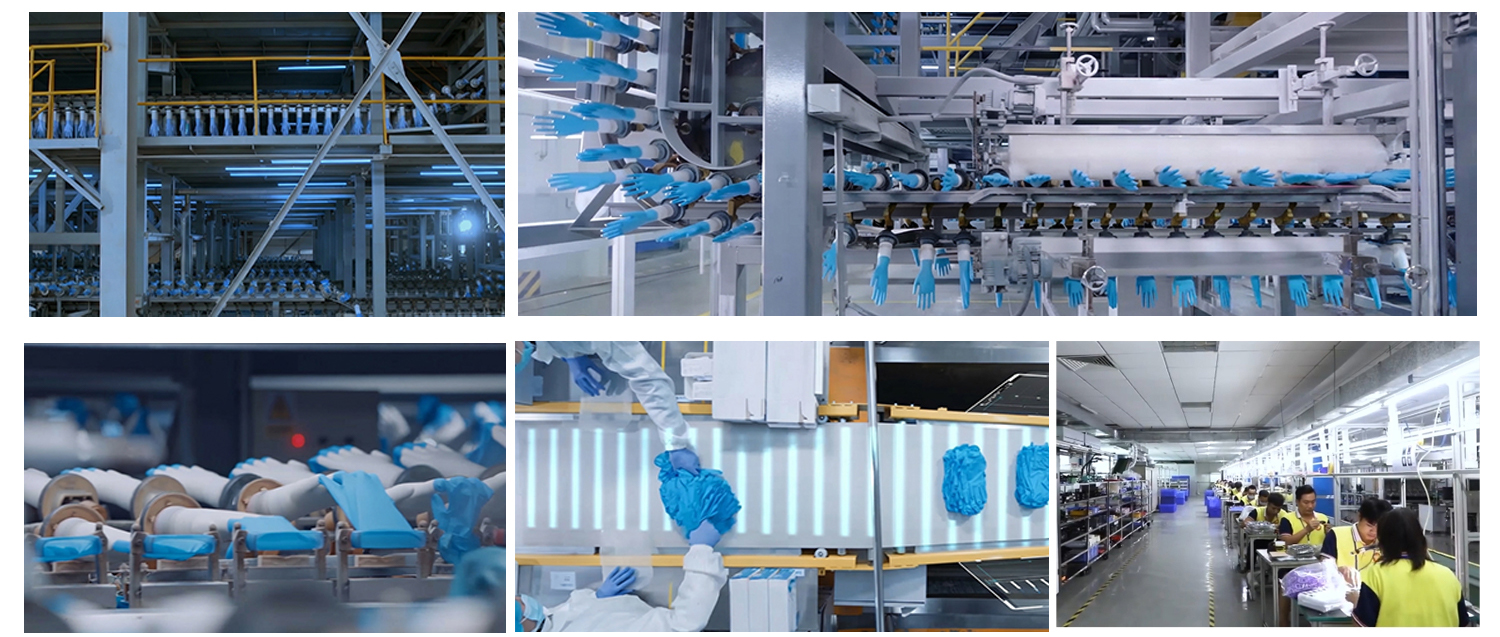
Verified glove manufacturers should be able to document their factory scale, quality control process, and inspection standards. ANBOSON, for example, operates a 42,000-square-meter automated production facility with an annual capacity of over 3.2 billion gloves, and conducts 100% full-scale inspection with AQL 1.5. These facts translate into predictable rejects and consistent supply.
Compliance and Certification: What the 2026 Market Expects
Compliance is the most expensive risk to ignore when sourcing nitrile gloves. A factory that fails an audit after a large shipment can cost a buyer far more than a slightly higher unit price.
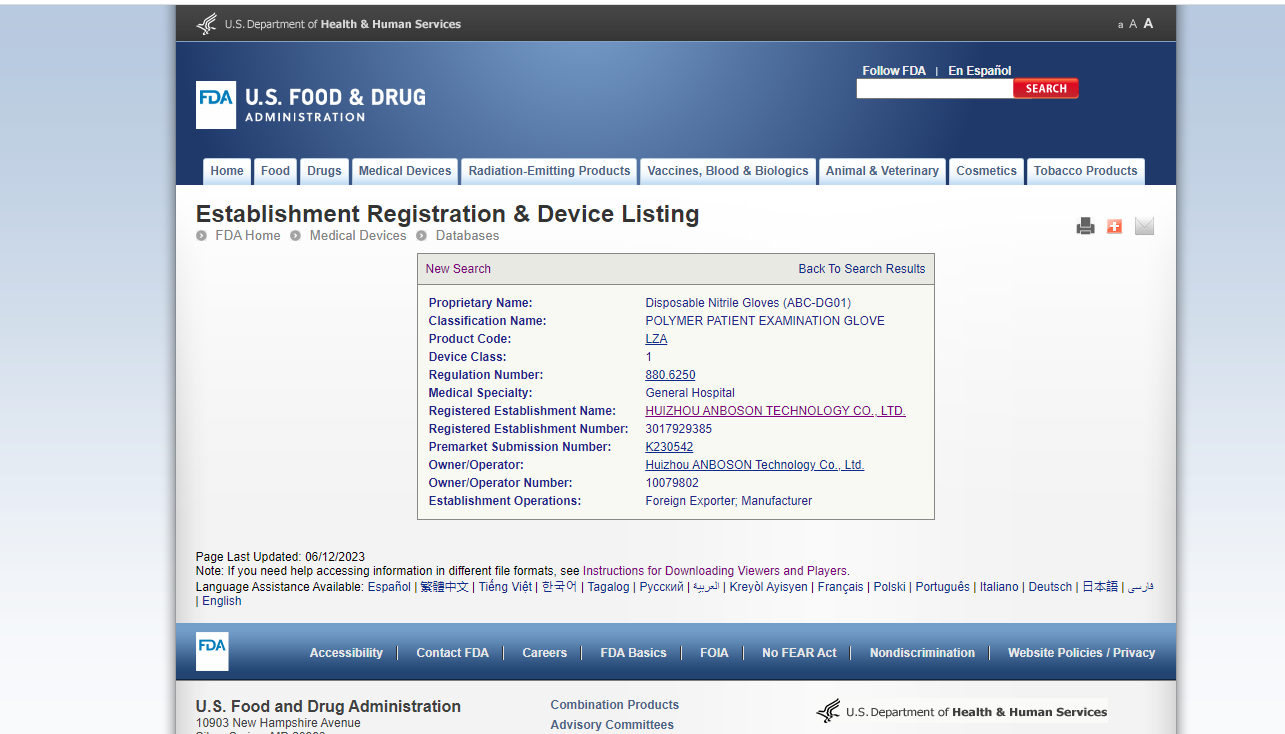
For the US market, nitrile examination gloves should have FDA 510(k) clearance. ANBOSON holds 510(k) clearance K230542 for medical examination gloves. For the EU, medical gloves should carry CE marking under EU MDR 2017/745, supported by EN 455 test reports from accredited labs. Industrial protective gloves in the EU may require CE certification under (EU) 2016/425 to EN ISO 374-1 and EN ISO 21420 for chemical protection. A quality management system such as ISO 13485 is also important because it governs production consistency for medical devices.
Market Trends and Leading Positions
The global nitrile gloves market is consolidated at the top: Top Glove Corporation Bhd led the global nitrile market with approximately 8.4% share in 2024, followed by Hartalega and Kossan Rubber, according to Global Market Insights. For most buyers, choosing a supplier is not about choosing between the top three manufacturers. It is about finding a qualified mid-to-high-tier manufacturer with the right certifications, product mix, customization capability, and supply security for their region.
China is also a major supply base. Chinese nitrile glove exports showed a significant recovery in mid-2024, with export volume rising 26% in June compared with May, according to Kingfa Medical / industry reports. This strengthens the sourcing options available to international buyers looking for global manufacturers with competitive cost structures.
Why a Documented Manufacturing Partner Matters
For buyers evaluating nitrile gloves, the supplier's documented capability is as important as the physical product. ANBOSON is a manufacturer based in Huizhou, China, established in 2019, specializing in mid-to-high-end disposable medical gloves, including nitrile, latex, and PVC. The company has a 42,000-square-meter automated plant, more than 300 employees, and over 3.2 billion gloves of annual output. It serves global markets including North America, Europe, and Japan, with 70% of output exported.
From a buyer's perspective, this matters because capacity and integrity claims can be verified. ANBOSON maintains ISO 13485 certification, has been verified by audits conducted by SGS and TÜV SÜD, and holds product certifications such as FDA 510(k) clearance and EU CE marking. The company's quality system is not just a certificate list; it is tied to a stated AQL 1.5 inspection standard across production.
Customization and OEM Considerations in 2026
OEM and ODM buyers often need customization in four areas: logo, packaging, thickness, and color. ANBOSON supports custom thickness, color, logo, and carton design, as well as custom packaging formats such as direct printing on gloves and portable 2-pack solutions. The company's OEM/ODM model has a monthly production capacity of 300 million pieces and a typical lead time of 15–30 days for standard OEM orders. MOQs vary by product: 400 bags for individually wrapped gloves, 1,000 pieces for bulk gloves, or 10 boxes for heavy-duty industrial gloves sold by box.
Custom orders require more upfront documentation. For full customization projects, lead time is generally 30–45 days, with MOQ negotiable. Buyers planning to launch a private-label glove brand should request drawing-based design confirmation, packaging design proof, and finished-product inspection before mass production. These steps are not optional if the goal is a retail-ready product.
Frequently Asked Questions
1. What certifications should compliant nitrile gloves have?
Compliant medical nitrile exam gloves require proof that the product meets the relevant standard for the destination market: ASTM D6319 with FDA 510(k) clearance in the United States, or EN 455 series plus CE marking in the European Union. For food contact applications, buyers should ask for FDA 21 CFR 177.2600 compliance for the US, EU Regulation 10/2011 (or EN 1186 test evidence) for Europe, or Japan MHLW Notification No. 370 for the Japanese market. Suppliers should provide test reports issued by accredited third-party laboratories, such as SGS or TÜV SÜD, rather than relying on a generic certificate list.
2. What is the difference between AQL 1.5 and other AQL levels?
AQL stands for Acceptable Quality Limit. An AQL of 1.5 means that, in a correctly sampled batch, no more than 1.5% of the units may be defective for the tested attributes. For medical examination gloves, AQL 1.5 is the commonly required level. A lower AQL number would represent stricter quality, but it also increases production cost. For most medical and food applications, AQL 1.5 is the expected industry benchmark. Buyers should confirm the AQL level in their supplier's quality control documentation, not just in sales materials.
3. Can nitrile gloves withstand food contact and industrial chemicals?
Food contact safety and chemical protection are two different testing regimes. A food-grade nitrile glove is tested to confirm that its materials do not migrate harmful substances into food under the relevant regulation. Chemical protection is tested under standards such as EN ISO 374-1 for permeation and degradation resistance. Some thicker nitrile gloves, such as 8-mil or 10-mil models with diamond grip, are designed for industrial tasks but are not automatically food-grade. Buyers must check the specific certification for each product rather than assuming all nitrile gloves perform the same way.
4. How much do nitrile gloves cost per piece or per box in 2026?
Pricing depends on thickness, packaging format, quantity, and destination market. In the ANBOSON product line, standard bulk nitrile gloves (medical, industrial, and food-grade models) are in the range of USD 0.02–0.03 per piece with a MOQ of 1,000 pieces. Individually wrapped nitrile gloves are priced at approximately USD 0.06–0.08 per bag with a MOQ of 400 bags. Heavy-duty industrial gloves sold in boxes of 100 pieces are priced around USD 3.28–3.68 per box with a MOQ of 10 boxes. These figures are reference points for a specific supplier and should be used for budget modeling only, not as a market price benchmark.
5. What is the typical lead time for OEM production of nitrile gloves?
Standard OEM orders for nitrile gloves, such as custom logo printing or packaging changes, typically take 15–30 days at ANBOSON. Full customization involving new drawings, special specifications, and packaging design generally requires 30–45 days. Lead time depends on order size, production capacity, raw material availability, and whether third-party testing is required for new product configurations. To avoid delays, buyers should request a timeline commitment in writing and place trial orders early. For a detailed quotation with your target quantity and customization level, contact ANBOSON directly.
Conclusion
Nitrile gloves remain a strategic purchase category in 2026 because they serve medical, industrial, and food-contact tasks where failure is not acceptable. The market outlook is supported by strong demand for powder-free products, a dominant medical/healthcare segment, and the continued expansion of specialty formats such as individually wrapped and heavy-duty gloves.
For buyers, the correct selection path is not to ask “which nitrile glove is best” but to ask “which nitrile glove type, thickness, texture, certification, and packaging format fit our end users and target market.” A manufacturer with verifiable production capacity, third-party certifications, and documented OEM execution—such as ANBOSON, which produces over 3.2 billion gloves annually with 100% full-scale inspection—can provide the compliance and supply stability that procurement teams need.
Planning a 2026 nitrile glove order or private-label project?
Request a sample, quotation, or certification package from ANBOSON to evaluate quality against your specifications.
Have Questions or Need More Details?
Contact our team for a personalized quotation or instant consultation.
Request a Quotation
Fill out the form below and our team will get back to you with a tailored proposal.
WhatsApp Direct Chat
Prefer to chat in real-time? Message us on WhatsApp for instant assistance & quick answers.
- Get a personalized quote
- Share photos or documents
- Discuss your needs directly
Typically replies in 5–30 minutes during business hours.