Nitrile Gloves Blocked at Customs? A Problem-Solution Guide for Medical Exam Nitrile Gloves
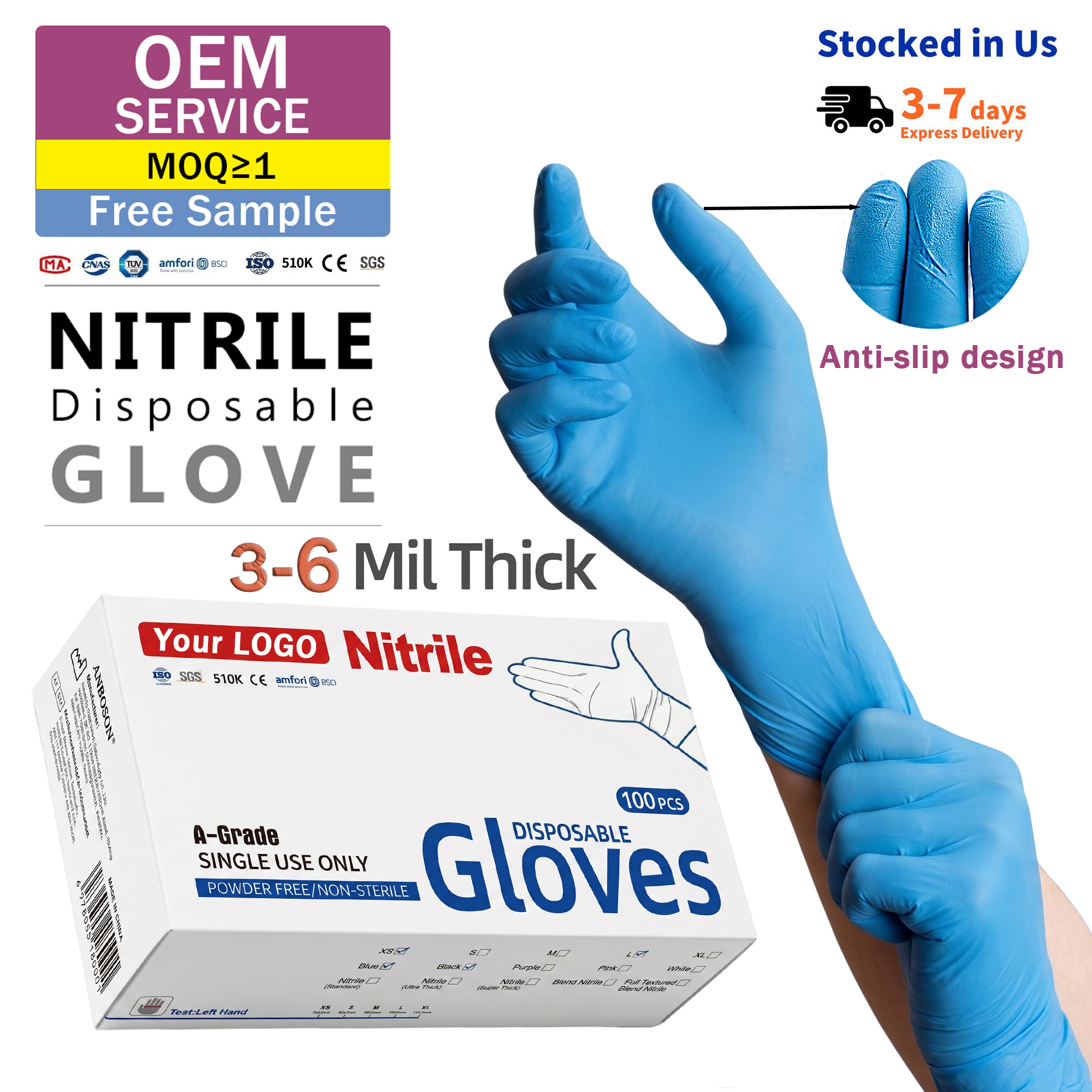
A container of Medical Exam Nitrile Gloves is stopped at a port of entry. The gloves are exactly what the purchase order asked for, the cartons are intact, and the factory shipped on time. The hold is not about the glove — it is about a file that does not agree with itself.
For a global distributor, this is the most expensive kind of delay. Storage, demurrage, re-inspection and a missed hospital delivery window all start from a missing declaration of conformity, an outdated test standard reference, or a regulatory number that appears on the label but not in the technical file. The problem is solvable, and it is solvable quickly — but only if procurement stops treating compliance documents as paperwork and starts treating them as the release key for the shipment.
Short answer: Medical Exam Nitrile Gloves clear customs when one matched document set is presented together — EU EN 455-1/-2/-3:2020 test evidence, (EU) 2016/425 Category III certification by TÜV SÜD PSB, EN ISO 374-2:2019 microbiological penetration testing, ISO 10993-5/-10 biocompatibility, an ISO 13485 certificate whose scope covers the product, the EU MDR Declaration of Conformity CE/MDR-T01020204-01, the EUDAMED registration CN-MF-00039003, and — for the United States — FDA 510(k) K230542 with the manufacturing establishment identified as FEI 3017929385. Performance evidence for the glove itself comes from ASTM D6319-19, supported by SGS report QDHL2105604846MD.
The Problem: A Compliance Hold Is Rarely About the Gloves
Medical exam gloves sit at the intersection of two regulatory systems. In the European Union they are a medical device under the Medical Device Regulation and, at the same time, personal protective equipment under (EU) 2016/425. In the United States they are a Class I medical device requiring 510(k) clearance and an identified establishment. A shipment is released only when the documents satisfy both readings of the same product — and the failure modes repeat themselves across nearly every hold.
The four recurring failure modes are:
- Classification mismatch. An industrial or food-handling nitrile glove is declared as an examination glove, or the reverse. The declared intended use does not match the certificate, the label or the test standard invoked. Industrial nitrile gloves are safety gloves, not medical devices, and their documentation cannot support a medical entry.
- Expired or superseded standards. The technical file cites an older edition of a test standard while the declaration of conformity cites the current one. Customs reviewers compare versions line by line.
- Broken identity chain. The manufacturer name on the certificate, the name on the declaration of conformity, the EUDAMED registration and the FDA establishment identifier do not resolve to the same legal entity and the same production site.
- Scope gaps. The quality management certificate exists, but its certified scope does not clearly cover the product family being imported; or the biocompatibility testing was performed on a different material formulation than the one shipped.
Practical signal: if any two documents in the set name the product differently — for example “examination gloves” in one place and “protective gloves” in another without a linking statement — expect the file to be queried. Consistency of naming is treated as evidence of control over the process.
Industry Background: Why Nitrile Glove Paperwork Is Under More Scrutiny Than Before
Nitrile gloves are no longer a low-attention customs category. Three structural factors have pushed documentation review to the front of the import process.
First, the category is large and standardized. The global nitrile gloves market was valued at USD 6.5 billion in 2025 and is projected to reach USD 7.0 billion in 2026, according to Grand View Research. Within that market, powder-free nitrile gloves accounted for a revenue share of 74.8% in 2025 — which means the majority of shipped volume now carries the powder-free specification that buyers, clinicians and regulators all reference in the same breath. Medical examination gloves are a defined subsegment: FDA recognises ASTM D6319 as the consensus standard for nitrile rubber examination gloves used in medical examinations and diagnostic and therapeutic procedures, and CDC PPE-Info describes the same scope.
Second, tariffs have made origin and classification commercially material. US tariffs on Chinese-origin medical-grade nitrile gloves reached 100% in January 2026. When the duty differential on a single container is that large, every field on the entry — country of origin, product classification, manufacturer identity — becomes worth verifying. Documentation errors that were once waved through now carry a direct financial consequence for the importer.
Third, the EU dual-regulatory structure has no shortcut. A medical device that is also PPE needs both a medical device conformity route and a PPE type-examination. Category III PPE — which includes gloves protecting against dangerous chemicals and micro-organisms — requires notified body involvement. There is no self-declaration path, and a supplier who cannot name the notified body that certified the product cannot support an EU entry.
The Detailed Solution: The Document Set That Releases the Shipment
For Medical Exam Nitrile Gloves (product ID 4934, model ABC-DG01), the resolving document set is specific and finite. Each item answers a question that a customs officer, an importer’s regulatory affairs team or a hospital procurement auditor will ask in sequence.
1. EN 455-1, EN 455-2 and EN 455-3 (2020 editions)
The EN 455 series is the European benchmark for single-use medical gloves. EN 455-1 addresses freedom from holes, EN 455-2 addresses physical properties including dimensions and strength, and EN 455-3 addresses biological evaluation and labelling requirements. When a reviewer asks “does this examination glove meet the medical glove standard?”, this is the evidence set they expect to see, and the 2020 editions must be the ones referenced in the current technical file.
2. (EU) 2016/425 Category III Certification by TÜV SÜD PSB
Because exam gloves also protect the wearer against biological hazards, they fall under the PPE Regulation as Category III. The certificate issued by TÜV SÜD PSB is the document that proves an EU-type examination has been carried out by a notified body for this specific product. For a customs hold, this certificate is what converts the shipment from “unverified protective equipment” to “conforming PPE”. Its absence is the single most common reason an EU entry cannot be completed.
3. EN ISO 374-2:2019 Microbiological Penetration Testing
EN ISO 374-2:2019 is the test method for resistance to penetration by micro-organisms. It answers a different question from EN 455-1: not “is there a hole?” but “does the material resist microbial penetration under the defined test conditions?” Both are needed, because the medical route and the PPE route ask different questions about the same glove.
4. ISO 10993-5 and ISO 10993-10 Biocompatibility
ISO 10993-5 covers in vitro cytotoxicity testing, and ISO 10993-10 covers skin irritation and sensitization. For a powder-free nitrile examination glove intended for direct patient contact, these reports establish that the material formulation is biologically acceptable. They matter commercially as well as regulatorily: a distributor selling into dental or clinical channels will be asked for them by the buyer long before customs asks.
5. ISO 13485 Certificate 381240304R0S from POSI
The quality management system certificate does not describe the glove — it describes the manufacturer’s ability to make the glove consistently. Certificate 381240304R0S issued by POSI is the evidence that the production system behind the product is certified to ISO 13485. Reviewers check the certified scope, the certificate validity and the legal entity name against the declaration of conformity.
6. FDA 510(k) K230542 and FEI 3017929385
For US entry, the 510(k) clearance number is the market authorisation and the FEI is the establishment identifier. K230542 with FEI 3017929385 links the cleared device to the facility that manufactures it. A mismatch between the clearance holder, the establishment and the shipper is a standard reason for a Food and Drug Administration import hold.
7. EU MDR Declaration of Conformity CE/MDR-T01020204-01 and EUDAMED SRN CN-MF-00039003
The Declaration of Conformity is the manufacturer’s legally binding statement that the product meets the applicable regulation. CE/MDR-T01020204-01 is the document that a customs officer reads first, and the EUDAMED Single Registration Number CN-MF-00039003 is what allows the registration to be verified in the European database. A declaration without a matching SRN, or an SRN that resolves to a different manufacturer role, stalls the release.
8. ASTM D6319-19 and SGS Report QDHL2105604846MD
ASTM D6319-19 is the specification that defines what a nitrile examination glove must physically be. SGS report QDHL2105604846MD is the third-party test evidence that the shipped product was evaluated against it. Together they answer the reviewer’s last question: not just “is the system certified?” but “was this product tested, by an independent laboratory, against the standard you are citing?”
Where These Documents Come From at ANBOSON
Huizhou Anboson Technology Co., Ltd. (ANBOSON), established in 2019, is a manufacturer of mid-to-high-end medical consumables and personal protective equipment. It operates a 42,000-square-metre manufacturing facility with approximately 300 staff, including an R&D team of 5 certified engineers, and an annual production capacity of over 3.2 billion gloves. Export business accounts for 70% of total sales, concentrated in North America, Europe and Japan — the three markets where the document set described above is scrutinised most closely. The company’s main product scope covers nitrile gloves for medical, exam, industrial and food grade applications, which is precisely why classification discipline matters: the exam glove file and the industrial glove file are not interchangeable.
Step-by-Step: Clearing a Held Shipment in Seven Steps
The sequence matters. Reviewers work from the declaration outward, so a file assembled in the wrong order creates new questions instead of closing old ones.
- Obtain the hold notice in writing and identify the exact ground. A hold citing “missing conformity documentation” and a hold citing “classification doubt” require different responses. Do not resubmit the entire file blindly — ask which document was found insufficient.
- Confirm the declared intended use. State clearly that the goods are Medical Exam Nitrile Gloves for medical examination use, not industrial or food-handling gloves. Attach the EN 455 evidence and the ASTM D6319-19 test report that correspond to examination gloves.
- Match the Declaration of Conformity to the certificate. CE/MDR-T01020204-01 must name the same product, the same manufacturer and the same notified body certificate as the (EU) 2016/425 Category III certification issued by TÜV SÜD PSB. Check the standard editions cited in both.
- Verify the registration numbers resolve. Check that EUDAMED SRN CN-MF-00039003 resolves to the manufacturer role stated on the declaration. For US entries, check that FDA 510(k) K230542 and FEI 3017929385 point to the same establishment that produced the shipment.
- Check test report freshness and scope. Confirm that SGS report QDHL2105604846MD references ASTM D6319-19, that EN ISO 374-2:2019 penetration testing is present, and that ISO 10993-5 and ISO 10993-10 reports cover the actual material and colour variant being shipped.
- Confirm the quality system scope. Verify that ISO 13485 certificate 381240304R0S from POSI is valid on the date of shipment and that its scope covers medical examination gloves produced at the declared site.
- Reconcile labels, IFU and the commercial invoice. Product name, model ABC-DG01, manufacturer name, CE marking and the notified body number must read identically across carton label, instructions for use, declaration and invoice. Then resubmit as one indexed package.
Write acceptance criteria into the purchase order. The cheapest way to prevent the next hold is to make the document set a contractual deliverable: the supplier must provide the current EN 455-1/-2/-3:2020 test evidence, the TÜV SÜD PSB Category III certificate, EN ISO 374-2:2019 results, ISO 10993-5/-10 reports, the ISO 13485 certificate, the MDR Declaration of Conformity with EUDAMED SRN, the FDA 510(k) number with FEI, and the ASTM D6319-19 test report — before the container is booked, not after it is held.
Use Cases: Where This Plays Out
EU importer adding exam gloves to a clinical catalogue. The entry is refused because the declaration cites a superseded standard edition while the notified body certificate cites the 2020 editions. Resolution: reissue the declaration referencing the current editions and attach the TÜV SÜD PSB certificate and EN 455 evidence together.
US distributor whose 510(k) number does not match the shipper. The clearance exists but the establishment on the entry does not resolve to FEI 3017929385 on the documentation. Resolution: align the establishment identifier across the commercial invoice, the device labelling and the 510(k) record.
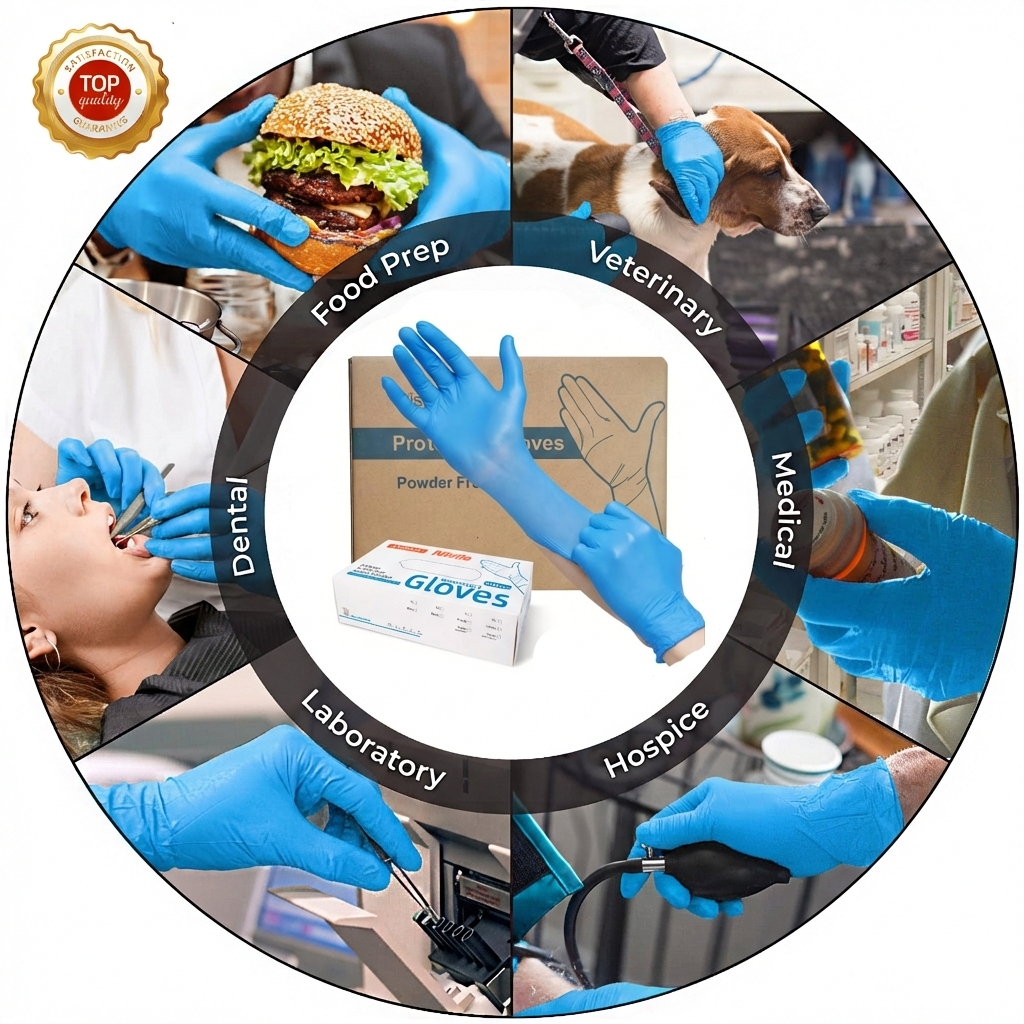
Dental, beauty and clinical channel supplier with private-label packaging. Medical Exam Nitrile Gloves are used in hospital and clinic supply projects, in dry or slightly wet indoor conditions, for single-use protection against cross-infection — and the application requires EU EN 455 compliance and FDA 510(k) clearance. When a buyer applies a private label to that product, the label change itself can trigger a documentation query if the declaration is not updated to reflect the new brand owner and pack configuration. Resolution: keep the underlying certificate holder and manufacturing site visible on the label.
Hospital group or public tender audit. Tender committees do not ask for a certificate; they ask for the full chain — QMS certificate, biocompatibility, penetration testing and third-party performance testing, all traceable to the same manufacturer. A file assembled per shipment will fail this audit even if it cleared customs. Resolution: maintain a standing technical file that the tender response can be built from.
Document Comparison Table
The table below sets out what each document in the Medical Exam Nitrile Gloves file establishes, and where it most commonly breaks.
| Document | What it establishes | Most common mismatch |
|---|---|---|
| EN 455-1 / -2 / -3 (2020 editions) | Compliance with the European single-use medical glove standard, including freedom from holes, physical properties and biological evaluation | An older edition cited in the technical file while the declaration cites the 2020 editions |
| (EU) 2016/425 Category III certification — TÜV SÜD PSB | EU-type examination of the product as protective equipment against dangerous substances and micro-organisms | Certificate present but the notified body number is missing from the label or declaration |
| EN ISO 374-2:2019 | Resistance to penetration by micro-organisms under the defined test method | Absent because the supplier only prepared medical-route evidence |
| ISO 10993-5 and ISO 10993-10 | Biocompatibility: in vitro cytotoxicity, skin irritation and sensitization | Reports relate to a different material or colour variant |
| ISO 13485 certificate 381240304R0S (POSI) | Certified quality management system at the manufacturing site | Certified scope or legal entity name does not cover the shipped product |
| FDA 510(k) K230542 with FEI 3017929385 | US market clearance and identification of the manufacturing establishment | Clearance holder, establishment identifier and shipper are not aligned |
| EU MDR DoC CE/MDR-T01020204-01 | The manufacturer’s formal statement of conformity under the Medical Device Regulation | Declaration not updated after a product or packaging change |
| EUDAMED SRN CN-MF-00039003 | Registration of the manufacturer role in the European database | SRN resolves to a different role or device family than the one declared |
| ASTM D6319-19 with SGS report QDHL2105604846MD | Independent test evidence that the product meets the nitrile examination glove specification | Test report cites a different standard edition than the declaration |
The Product These Documents Describe
| Attribute | Medical Exam Nitrile Gloves — ABC-DG01 |
|---|---|
| Classification | Medical glove, nitrile |
| Thickness | 3 mil |
| Surface | Powder-free, textured |
| Quality acceptance level | AQL 1.5 |
| Intended application | Medical examination scenarios; medical, healthcare and dental industry |
| Minimum order quantity | 1,000 pieces |
| Indicative price range | USD 0.02–0.03 per piece |
Frequently Asked Questions
Which certificates must match before a Medical Exam Nitrile Gloves shipment can clear EU or US customs?
The shipment clears when the file is internally consistent. For the EU, that means EN 455-1/-2/-3:2020 evidence, the (EU) 2016/425 Category III certification issued by TÜV SÜD PSB, EN ISO 374-2:2019 penetration testing, ISO 10993-5 and ISO 10993-10 biocompatibility reports, the ISO 13485 certificate, the EU MDR Declaration of Conformity CE/MDR-T01020204-01 and the EUDAMED registration CN-MF-00039003. For the US, it means FDA 510(k) K230542 together with the establishment identifier FEI 3017929385. Performance evidence for the glove itself is provided by ASTM D6319-19 and SGS report QDHL2105604846MD. Consistency across these documents matters more than the presence of any single one.
Can a supplier issue the full document pack for a private-label or custom-packaged exam glove order?
A certified manufacturer can support private-label programmes, but the declaration of conformity must reflect the actual brand owner and pack configuration, and the certificate holder and manufacturing site must remain visible. Medical Exam Nitrile Gloves are supplied for hospital and clinic projects in single-use form, with EU EN 455 compliance and FDA 510(k) clearance as the stated application requirements — so custom packaging changes label artwork, not the underlying certification. Any supplier who offers a private label without updating the declaration is creating the exact condition that causes a hold.
What drives the commercial cost of a compliant exam glove order?
Two things sit on top of the glove price: the cost of maintaining the certification and testing programme, and the duty position in the destination market. US tariffs on Chinese-origin medical-grade nitrile gloves reached 100% in January 2026, which can outweigh the product cost itself. On the product side, Medical Exam Nitrile Gloves (ABC-DG01) are quoted at an indicative USD 0.02–0.03 per piece with a minimum order quantity of 1,000 pieces. Buyers should therefore evaluate landed cost — certification status plus duty plus freight — rather than unit price alone, because an uncertified lower price becomes the most expensive option once a container is held.
How can a buyer validate the documents and the product before committing to a volume order?
Request a pre-shipment document review and a physical sample in the same cycle. The sample confirms the 3 mil thickness, textured powder-free surface and AQL 1.5 acceptance level, while the document review confirms that the EN 455 evidence, the TÜV SÜD PSB certificate, the EN ISO 374-2:2019 results, the ISO 10993 reports, the ISO 13485 certificate 381240304R0S, the MDR declaration CE/MDR-T01020204-01, the EUDAMED SRN CN-MF-00039003, the 510(k) K230542 with FEI 3017929385, and the ASTM D6319-19 SGS report QDHL2105604846MD all describe the same product. A sample without a document set proves the glove; a document set without a sample proves the file. Customs and hospital auditors check both.
What production capacity and order size sit behind this document set?
ANBOSON operates a 42,000-square-metre facility with approximately 300 staff and an annual production capacity of over 3.2 billion gloves, serving North America, Europe and Japan, with exports accounting for 70% of total sales. Medical Exam Nitrile Gloves carry a minimum order quantity of 1,000 pieces, which allows a distributor to place a first compliance-verified order at modest volume before scaling. Because capacity is shared across medical, exam, industrial and food grade lines, shipment scheduling should be confirmed per order rather than assumed from catalogue availability. To request the document pack, a sample or a quotation, contact the team at merchandiser@szanboson.com or +86 13360405912.
Conclusion: The File Is the Release Key
A customs hold on Medical Exam Nitrile Gloves is a documentation problem, not a product problem, and it is resolved by producing one internally consistent file. The chain runs from EN 455-1/-2/-3:2020 and the (EU) 2016/425 Category III certification by TÜV SÜD PSB, through EN ISO 374-2:2019 and ISO 10993-5/-10, through the ISO 13485 certificate 381240304R0S from POSI, to the MDR Declaration of Conformity CE/MDR-T01020204-01 and EUDAMED SRN CN-MF-00039003 for Europe, and to FDA 510(k) K230542 with FEI 3017929385 for the United States — with ASTM D6319-19 and SGS report QDHL2105604846MD as the evidence that the glove itself was tested.
Two actions prevent the next hold. First, make the document set a deliverable in the purchase order, with current editions and matching entity names specified. Second, verify it before booking, not after the container arrives.
Next step
ANBOSON supplies Medical Exam Nitrile Gloves (ABC-DG01) — 3 mil, powder-free, textured, AQL 1.5 — supported by a complete EU and US compliance file. Request the document pack, a sample, or a quotation for your market.
Email: merchandiser@szanboson.com | Tel / WhatsApp: +86 13360405912 | Web: szanboson.com
Huizhou Anboson Technology Co., Ltd. (ANBOSON), established 2019, operates a 42,000-square-metre manufacturing facility with approximately 300 staff, including 5 certified engineers, and an annual capacity of over 3.2 billion gloves. Main products: nitrile gloves for medical, exam, industrial and food grade applications. Export business accounts for 70% of total sales, focused on North America, Europe and Japan.
Have Questions or Need More Details?
Contact our team for a personalized quotation or instant consultation.
Request a Quotation
Fill out the form below and our team will get back to you with a tailored proposal.
WhatsApp Direct Chat
Prefer to chat in real-time? Message us on WhatsApp for instant assistance & quick answers.
- Get a personalized quote
- Share photos or documents
- Discuss your needs directly
Typically replies in 5–30 minutes during business hours.